
click on the image to view fullscreen
The Tadpoles
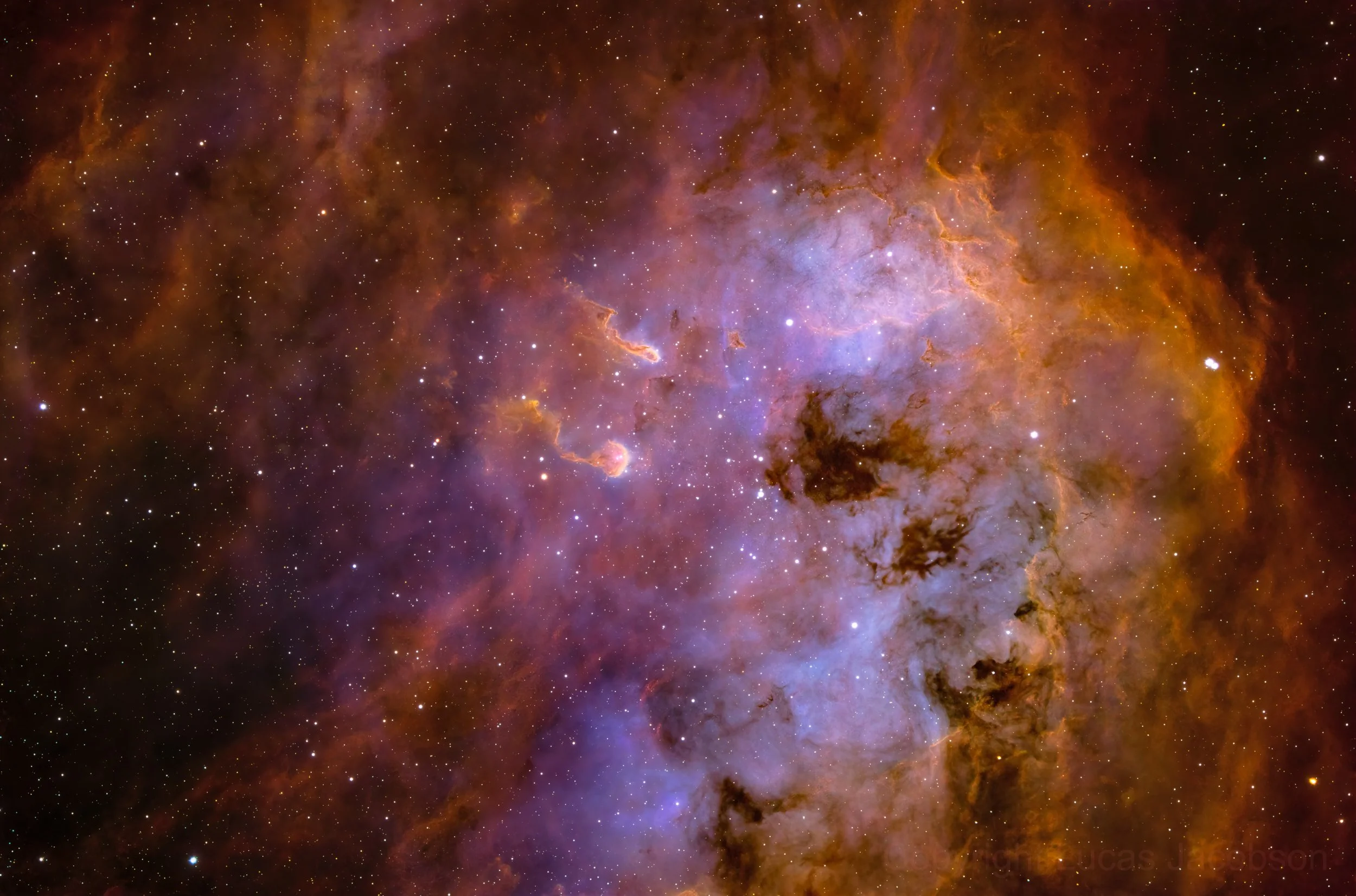
The Tadpole Nebula is a region of active star formation where intense radiation from young stars is reshaping the surrounding gas and dust. Within this environment, dense knots of material—known as “tadpoles”—resist that outward pressure, leaving behind elongated tails as their surfaces are slowly eroded.
This image uses a narrowband technique that isolates specific wavelengths of light emitted by different elements in the nebula. Sulfur, hydrogen, and oxygen each glow at distinct energies, and here they are mapped into visible color to reveal structure that would otherwise be difficult to distinguish.
The warmer tones highlight regions rich in sulfur and hydrogen—denser areas where material is more resistant to the flow of energy—while cooler hues trace oxygen emission, often associated with more energetic or exposed regions. Together, these layers reveal how radiation penetrates, compresses, and sculpts the nebula over time.
Dark filaments cut through the scene, marking areas of dense dust that block light and shape the surrounding gas. Around them, the glowing material appears almost fluid, emphasizing that this is not a static cloud, but an evolving system.
The “tadpoles” themselves are temporary structures. Over time, they will continue to erode and disperse, their material returning to the surrounding environment—contributing to the ongoing cycle of star formation and transformation within the nebula.